


close
Choose Your Site
Global
Social Media
Views: 0 Author: Site Editor Publish Time: 2025-12-23 Origin: Site


In aerospace engineering, precision is non-negotiable. How does CNC machining play such a crucial role in ensuring the accuracy and reliability of aerospace parts?
In this article, we'll explore the essential role of CNC machining in aerospace engineering, highlighting its contributions to precision, efficiency, and safety. You'll learn about the different techniques and technologies that make CNC machining indispensable in the aerospace industry.
In aerospace engineering, even the smallest defect can result in catastrophic consequences. The parts used in aircraft and spacecraft must be manufactured with an exceptional level of accuracy. Components like engine parts, landing gear, and structural elements must adhere to strict specifications to ensure they perform optimally under extreme conditions. CNC machining is critical in maintaining these high standards, providing the precision needed for safety, reliability, and overall performance.
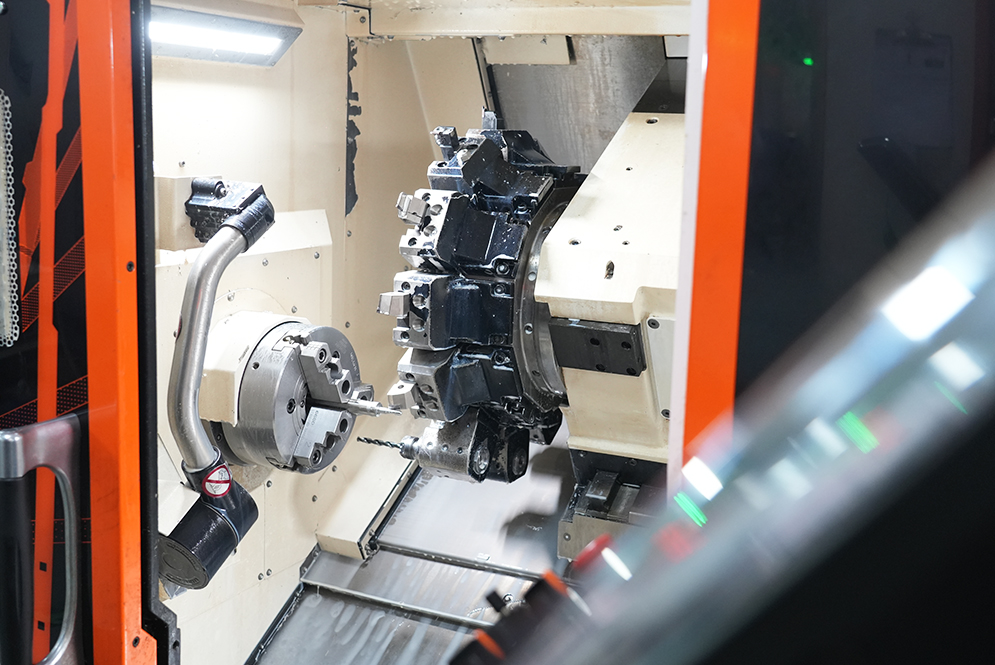
Aerospace parts are governed by rigorous standards and certifications, including those from organizations like the Federal Aviation Administration (FAA) and the European Union Aviation Safety Agency (EASA). These standards require that every component be manufactured with precise dimensions, tight tolerances, and excellent surface finishes. CNC machining is integral to meeting these industry-specific requirements by ensuring that parts are consistently produced to the exact specifications.
CNC machining ensures that aerospace components are fabricated with the necessary precision. By using advanced computer programming, automated processes, and sophisticated machinery, CNC machines can repeatedly produce parts with minimal variation. This level of consistency is essential in aerospace, where even the smallest deviation from specifications can lead to performance issues or safety risks. CNC machining offers unparalleled precision, making it indispensable to the aerospace industry. The ability to handle complex geometries and materials further solidifies its importance in producing high-quality aerospace parts.
Tip: Using advanced CNC machining technology can significantly reduce human error and maintain precision in highly demanding aerospace applications.
Aerospace manufacturing requires specialized techniques to create parts that are both strong and lightweight. CNC machining offers various techniques that are crucial for meeting the specific demands of aerospace engineering. These techniques include milling, turning, and high-speed machining, all of which allow for precise shaping of high-performance materials. By enabling the production of complex geometries, CNC machining ensures that components meet both structural integrity and weight requirements. This capability is vital in aerospace, where every part must be optimized for maximum strength and minimum weight.
There are several types of CNC machines used in aerospace manufacturing, each suited for different tasks. Milling machines, for example, are used for cutting and shaping materials, while turning machines are used for producing cylindrical parts. Each machine type offers unique advantages, depending on the material and complexity of the part being produced. CNC machines are capable of working with a range of materials, from lightweight aluminum to superalloys and composites, making them versatile tools in aerospace production.
Material Type | Properties | Applications in Aerospace |
Titanium Alloys | Lightweight, high strength, corrosion resistant. | Used for engine components, structural parts, and fasteners. |
Aluminum Alloys | Lightweight, good thermal and electrical conductivity. | Common for fuselage components, wing structures, and internal systems. |
Superalloys | High temperature strength and resistance to oxidation. | Ideal for turbine blades, jet engines, and exhaust systems. |
CNC machining in aerospace often involves the use of specialized cutting tools designed for high-performance materials like titanium, aluminum, and high-strength steel. These tools are made from hard, durable materials like carbide, which can withstand the extreme forces generated during machining. Additionally, CNC machining can employ advanced coatings, such as Titanium Nitride (TiN), to reduce friction and extend tool life.
High-speed machining (HSM) is another CNC technique that is used to improve productivity and precision in aerospace manufacturing. This technique involves using higher cutting speeds to reduce machining time and increase the overall efficiency of the manufacturing process. However, high-speed machining must be carefully controlled to avoid thermal damage to the material. For aerospace components, it is vital to balance cutting speed with heat management to preserve the material's integrity.
CNC Technique | Description | Applications in Aerospace |
Milling | Cutting tool rotates to remove material from a stationary workpiece. | Used for complex geometries like turbine blades and aircraft wings. |
Turning | Workpiece rotates while the cutting tool remains stationary. | Common for producing cylindrical parts such as engine shafts and landing gear. |
High-Speed Machining | Uses high cutting speeds for fast material removal. | Improves production efficiency and part accuracy for large, complex aerospace components. |
A key challenge in aerospace manufacturing is balancing cost efficiency with quality. CNC machining helps address this challenge by reducing both production time and costs, while ensuring that parts meet the stringent requirements of the industry.
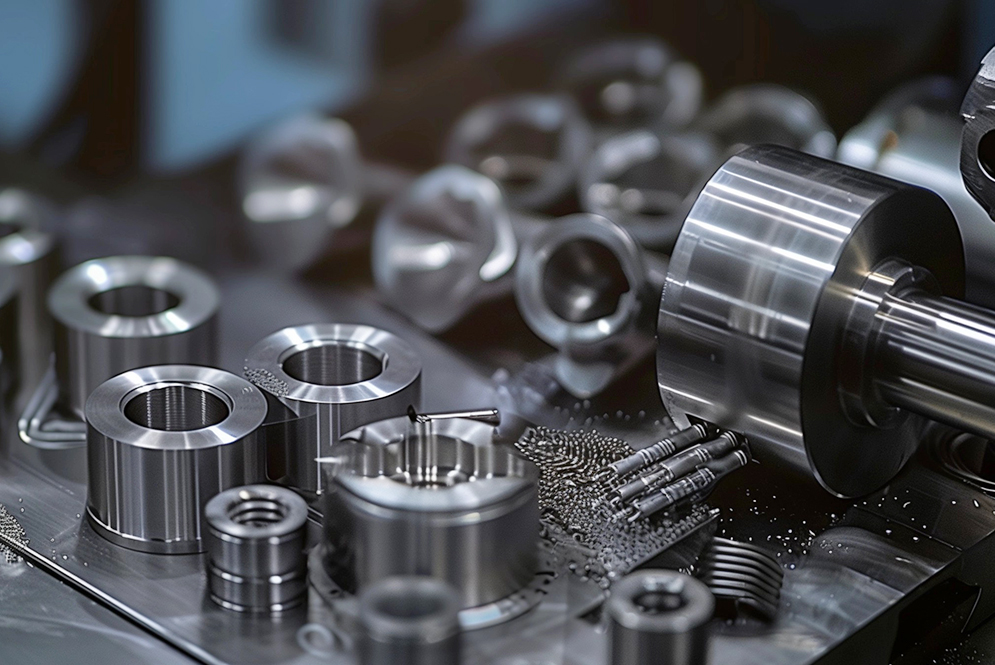
CNC machining helps reduce costs by minimizing material waste. Since the process is highly precise, it ensures that materials are used efficiently, leaving minimal waste. In addition, CNC machines can often operate for longer periods without requiring constant human supervision, which reduces labor costs. Furthermore, CNC machining minimizes the need for post-machining adjustments or rework, further cutting costs in the production process.
One of the most significant benefits of CNC machining in aerospace is its ability to produce parts with high efficiency. With automated setups and pre-programmed processes, CNC machines can work at a consistent pace, improving production rates without compromising quality. This efficiency is especially important in industries like aerospace, where timelines for manufacturing critical components are often tight.
CNC machining can dramatically shorten the lead times for producing complex aerospace parts. Through rapid prototyping, CNC machining allows manufacturers to quickly produce initial samples of components and make necessary adjustments before moving to full production. This shortens the overall production cycle and helps aerospace companies bring products to market faster.
Tip: By optimizing CNC machining for production efficiency, aerospace manufacturers can reduce lead times, improve cost-effectiveness, and enhance overall operational productivity.
As technology continues to advance, the role of CNC machining in aerospace engineering is evolving. New developments in automation, material science, and manufacturing techniques are expanding the capabilities of CNC machining, making it even more integral to the future of aerospace manufacturing.
CNC machining is increasingly integrating with technologies like artificial intelligence (AI) and machine learning (ML) to enhance precision, predict tool wear, and optimize cutting parameters. These innovations are enabling manufacturers to further improve the efficiency and reliability of CNC machining processes. The integration of automation is expected to further streamline production, reducing human intervention and enhancing consistency.
Additive manufacturing (AM), or 3D printing, is another emerging technology that is being integrated with CNC machining. AM allows for the creation of highly complex parts that may not be achievable through traditional machining methods. In aerospace, this is particularly useful for producing lightweight structures and components that require intricate geometries. The hybridization of CNC machining with additive manufacturing allows manufacturers to benefit from the strengths of both methods.
With an increasing emphasis on sustainability, aerospace companies are looking for ways to reduce material waste and energy consumption in their manufacturing processes. CNC machining plays a vital role in this effort by reducing waste through high-precision cuts and improving energy efficiency. As green manufacturing practices continue to evolve, CNC machining will play a key role in helping the aerospace industry meet sustainability goals.
CNC machining plays a vital role in aerospace engineering, ensuring high precision and efficiency in manufacturing complex parts. It helps meet stringent industry standards, reducing production costs and lead times. Dongguan Dawang Precision Mould Co., Ltd. offers cutting-edge CNC machining services, providing high-quality, reliable aerospace components that enhance performance and safety.
A: CNC machining is crucial in aerospace engineering because it ensures precision, efficiency, and high-quality manufacturing of complex aerospace components that meet strict industry standards.
A: CNC machining uses advanced computer-controlled processes to achieve tight tolerances and repeatability, making it ideal for manufacturing high-precision aerospace parts.
A: Key CNC machining techniques include milling, turning, and high-speed machining, all of which help create durable, lightweight, and accurate aerospace components.
A: CNC machining is used for materials like titanium, aluminum, and superalloys, which are essential for the strength and durability of aerospace components.
A: CNC machining enhances efficiency by automating processes, minimizing errors, and enabling rapid prototyping, thus reducing overall production time for aerospace parts.


