


close
Choose Your Site
Global
Social Media
Views: 0 Author: Site Editor Publish Time: 2026-01-21 Origin: Site


AI is rapidly reshaping industries, and CNC machining is no exception. As AI continues to advance, it's optimizing every aspect of the CNC machining process, from programming to real-time adjustments. In this article, we will explore how AI is revolutionizing CNC machining and the benefits it brings to industries relying on high-precision manufacturing.
AI is transforming CNC programming by automating toolpath generation. It can quickly process historical data, adjusting variables such as cutting speeds and feed rates based on real-time conditions. This adjustment increases both speed and precision. Through continuous learning, AI refines its algorithms, allowing CNC machines to produce parts with exceptional accuracy.
At Dongguan Dawang Precision Mould Co., Ltd., AI plays a crucial role in streamlining CNC programming. By reducing manual programming efforts, the company ensures that its production runs with greater consistency and fewer errors. This AI-driven process enables quicker transitions between different product designs, allowing for faster prototyping and production.
AI also helps in managing tool wear and optimizing cutting strategies. In the long run, this reduces the time spent on adjustments and ensures that each piece produced adheres to the highest standards.
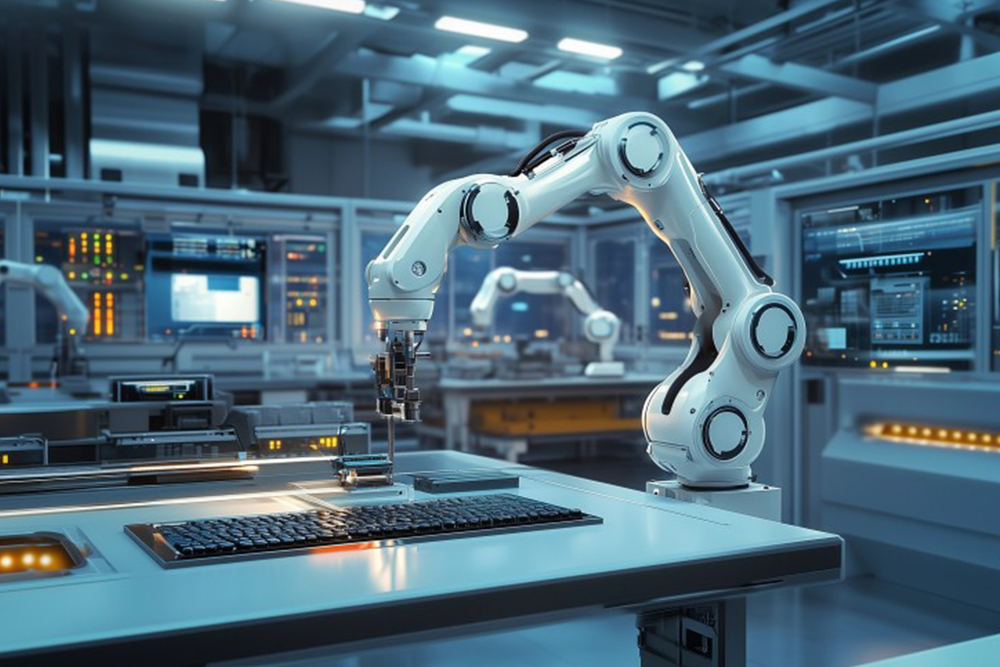
AI-driven CNC machines are capable of adapting to changing conditions in real time. Whether it's variations in material properties, tool wear, or environmental factors, AI ensures that the machining process remains optimal. These systems constantly analyze the data provided by the machine, adjusting parameters to maintain peak performance.
For Dawang Precision, integrating AI into CNC machinery means that the company can monitor machines continuously. This proactive approach helps maintain high-quality output, even during high-volume or large-scale manufacturing runs. As a result, Dawang Precision ensures consistent, defect-free production across its diverse portfolio of clients and industries.
AI systems significantly improve the precision of CNC machining. By adjusting parameters like cutting speeds and feed rates on-the-fly, AI ensures minimal human error, allowing parts to be produced with micron-level accuracy. This is particularly important in industries like aerospace, medical devices, and robotics, where even slight variations can lead to expensive mistakes or compromised safety.
Dawang Precision is a leader in producing high-precision parts, boasting tolerances as fine as 0.002 mm. AI-driven monitoring and real-time adjustments further enhance the company's ability to meet the exacting standards required by its clients.
One of the most powerful applications of AI is in predictive maintenance. AI-driven systems track machine data and can predict when a part is likely to fail. By addressing these issues before they cause unplanned downtime, AI helps Dawang Precision optimize its production schedules and keep machines running efficiently.
This capability ensures that Dawang Precision meets its production timelines while reducing costly repairs and unplanned downtime. As a result, the company maximizes machine uptime, which is crucial for high-volume manufacturing.
AI enhances CNC machining efficiency by adjusting operations to optimize material usage and minimize waste. By fine-tuning cutting processes, AI maximizes every inch of material, reducing overall consumption and production costs. This not only saves resources but also accelerates cycle times, allowing for faster production without sacrificing quality.
Dawang Precision has successfully integrated AI into its CNC machines to optimize productivity. With AI’s help, the company has increased its throughput while ensuring that material utilization is as high as possible, maintaining a high level of sustainability in its manufacturing processes.
Benefit | Impact on CNC Machining | Dawang Precision Example |
Enhanced Precision | Real-time adjustments lead to micron-level accuracy | Tolerances as fine as 0.002 mm in parts |
Predictive Maintenance | Prevents downtime by forecasting maintenance needs | Ensures machines run optimally, reducing costs |
Increased Efficiency | Optimizes material use and accelerates production | Higher productivity with reduced waste |
AI is being applied across various manufacturing sectors, making a significant impact in multiple industries:
● Aerospace: AI enhances the production of lightweight, high-strength components that are crucial for aircraft. These components contribute to improved fuel efficiency and overall performance.
● Automotive: In the automotive industry, AI ensures consistent production quality, reducing scrap rates and speeding up assembly lines. This results in faster production and lower costs.
● Medical Devices: For critical healthcare components like implants and prosthetics, AI ensures that each part meets stringent safety and quality standards.
● Electronics: AI is used to produce small, intricate parts required for consumer electronics, such as circuit boards and components for smartphones.
● Dongguan Dawang Precision Mould Co., Ltd. serves industries like aerospace, robotics, medical devices, and automotive by leveraging AI to ensure high-quality, high-volume production.
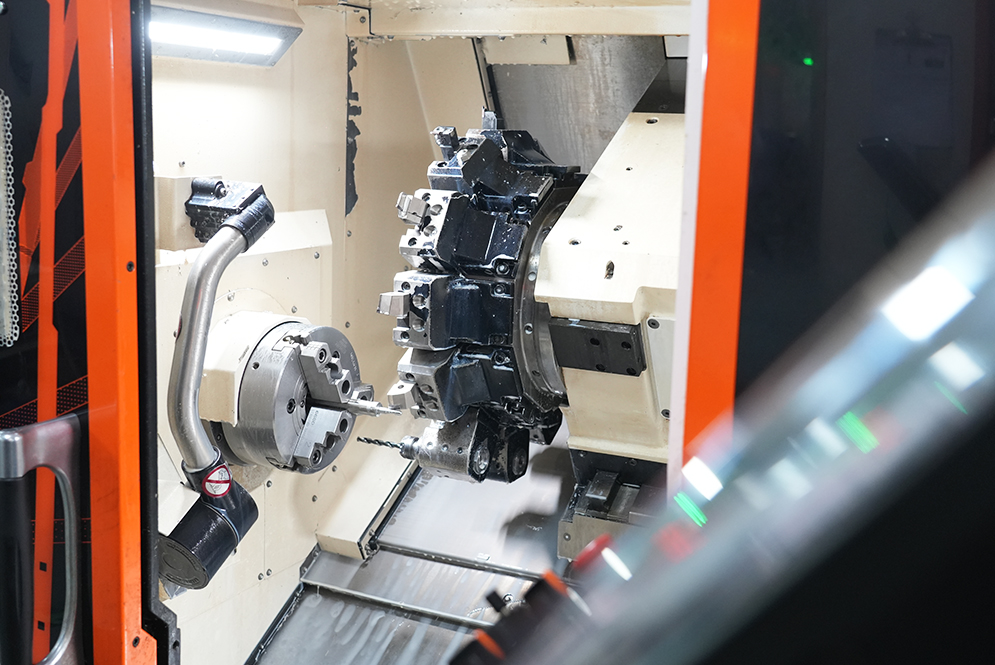
AI-based machine vision systems are integral to real-time quality control during CNC machining. These systems continuously monitor the production process and detect defects or anomalies that may arise, ensuring that each part meets the required specifications.
Dawang Precision integrates AI-powered quality control systems to automate inspections, reducing the risk of defects and ensuring that only parts that meet strict quality standards reach customers. This also speeds up the overall production process, as quality checks are done automatically without the need for manual intervention.
Industry | AI Application | Example from Dawang Precision |
Aerospace | Production of lightweight, high-strength components | AI ensures precision for aircraft parts |
Automotive | Enhancing part consistency and reducing scrap | Faster assembly and improved part quality |
Medical Devices | Ensuring precision in critical healthcare components | AI improves quality in implants and prosthetics |
With AI integration, industries such as aerospace, automotive, and medical devices are experiencing enhanced precision, faster production times, and lower costs, making AI an indispensable part of modern CNC machining.
This approach ensures that companies like Dawang Precision remain at the cutting edge of manufacturing, capable of delivering superior products to clients worldwide.
Industry 4.0 marks a new era where advanced technologies like AI, IoT, and robotics merge to create smarter and more autonomous manufacturing processes. AI plays a pivotal role in this revolution, optimizing production lines by enabling machines to make decisions without human intervention. This shift allows manufacturers to create smarter factories capable of continuous improvement and adaptability.
Dongguan Dawang Precision Mould Co., Ltd. is embracing Industry 4.0 by incorporating AI into its operations. The company integrates AI-driven technologies across its CNC machining processes, enhancing production flexibility, scalability, and overall customer satisfaction. AI not only boosts efficiency but also improves the customization of solutions for different industries, whether in high-volume manufacturing or intricate, low-volume production runs.
AI enables Dawang Precision to respond quickly to customer needs and adapt to shifting market demands. This level of flexibility is vital in an era where the speed of delivery and precision are paramount to maintaining a competitive edge.
Smart manufacturing powered by AI is transforming the way production is managed. AI-driven systems continuously gather and analyze real-time data from CNC machines, allowing manufacturers to make data-backed decisions that enhance productivity and reduce waste. By collecting insights from every step of the process, AI can optimize operations and improve resource usage.
Dawang Precision has successfully implemented AI to streamline operations, enabling them to deliver faster turnaround times for both small-batch and large-scale orders. AI’s role in smart manufacturing also reduces bottlenecks, minimizes downtime, and enhances overall equipment efficiency, ensuring that each part is produced with optimal quality and minimal waste.
Benefit | Impact on Production | Example from Dawang Precision |
Enhanced Efficiency | Faster production, fewer interruptions | Reduced cycle times and higher throughput |
Improved Resource Usage | Optimizes material consumption and reduces waste | AI-driven systems minimize material waste |
Streamlined Operations | More responsive to production demands and market shifts | Faster adaptation to customer needs |
AI brings real-time process optimization to CNC machining. By analyzing data such as vibrations, material hardness, and tool wear, AI systems automatically adjust operations to ensure that machining conditions remain optimal. This continuous feedback loop ensures that machining processes are fine-tuned for maximum efficiency, even as conditions change.
Dongguan Dawang Precision Mould Co., Ltd. uses AI to monitor every stage of the machining process. The AI system identifies potential issues in real time, allowing the company to address them before they impact the final product. This proactive approach results in improved overall efficiency and a reduction in errors, helping Dawang Precision maintain its reputation for delivering high-precision parts.
AI-powered CNC machines are incredibly adaptable, allowing manufacturers to reconfigure tool paths quickly in response to customer demands or product specifications. This flexibility is essential for industries that require fast changes in production, especially when transitioning between different product designs.
For Dawang Precision, this adaptability allows them to serve multiple industries, including aerospace, automotive, and medical devices. Whether it’s a complex aerospace component or a batch of medical device parts, AI enables the company to efficiently switch between different production requirements without compromising quality.
Advantage | Effect on Manufacturing | Example from Dawang Precision |
Increased Flexibility | Quick adjustments to production processes | Rapid reconfiguration for different industries |
Faster Production Adaptation | Ability to switch between product types efficiently | Meeting diverse customer needs seamlessly |
Better Scalability | More adaptable to varying production volumes | AI-driven scalability in both small and large orders |
The future of CNC machining lies in fully autonomous machines powered by AI. These machines will be capable of making decisions based on incoming data, adapting their operations to optimize machining without human oversight. This will significantly boost productivity, reduce errors, and streamline the entire manufacturing process.
Dongguan Dawang Precision Mould Co., Ltd. is preparing for this future by integrating AI technologies that pave the way for autonomous CNC machining systems. By staying ahead of this technological shift, Dawang Precision ensures that it remains a leader in high-precision manufacturing, ready to take on the challenges of tomorrow’s manufacturing needs.
The combination of AI and IoT is creating a network of interconnected machines that communicate and share data seamlessly across production lines. This integration allows for more advanced process optimization, predictive maintenance, and improved product tracking.
Dawang Precision is poised to benefit from this technological shift by incorporating IoT with AI to further improve the precision and efficiency of its CNC machining operations. This integrated system will enable Dawang Precision to optimize machine performance, predict maintenance needs, and monitor production quality across multiple systems in real time.
Technology | Impact on CNC Machining | Example from Dawang Precision |
AI-Powered Autonomous Machines | Fully autonomous decision-making systems in production | Enhanced efficiency and reduced human error |
AI and IoT Integration | Seamless data sharing across connected machines | Improved real-time monitoring and optimization |
Predictive Maintenance | Proactive system management to prevent downtime | Increased machine lifespan and minimized disruptions |
This integration will not only improve operational efficiency but also reduce operational costs and downtime, positioning Dongguan Dawang Precision Mould Co., Ltd. as a forward-thinking leader in the CNC machining industry.
The integration of AI in CNC machining offers significant improvements in efficiency, precision, and cost-effectiveness. Dongguan Dawang Precision Mould Co., Ltd. is at the forefront, using AI to optimize machining processes, enhance product quality, and provide innovative solutions across various industries. Their commitment to incorporating advanced technologies positions them as a leader in precision manufacturing.
A: CNC Machining is a precision manufacturing process that uses computers to control machine tools. AI optimizes CNC Machining by automating toolpath generation, improving efficiency, and ensuring higher accuracy.
A: AI fine-tunes CNC Machining processes in real-time, adjusting parameters like cutting speeds and feed rates. This results in enhanced precision and reduced human error, leading to micron-level accuracy.
A: Predictive maintenance, driven by AI, helps anticipate equipment failures before they occur. This reduces downtime, improves machine efficiency, and ensures continuous high-quality production.
A: AI optimizes machining parameters to minimize material waste. By analyzing real-time data, it adjusts the processes, ensuring every part is produced efficiently with minimal waste.
A: Industries like aerospace, automotive, medical devices, and electronics benefit significantly from AI in CNC Machining, as it ensures high precision, fast production, and cost savings.


